
In 2016, NAVER App and Mobile Web serve 30M+ monthly users as Korea’s primary search and news platform.
As the Product & Interaction Designer, I redesigned personalization and subscription-driven discovery, raising home personalization from 14% → 60% and increasing session duration and menu subscriptions.
I also introduced rapid prototyping practices that led to the creation of an internal Interaction Design Team,
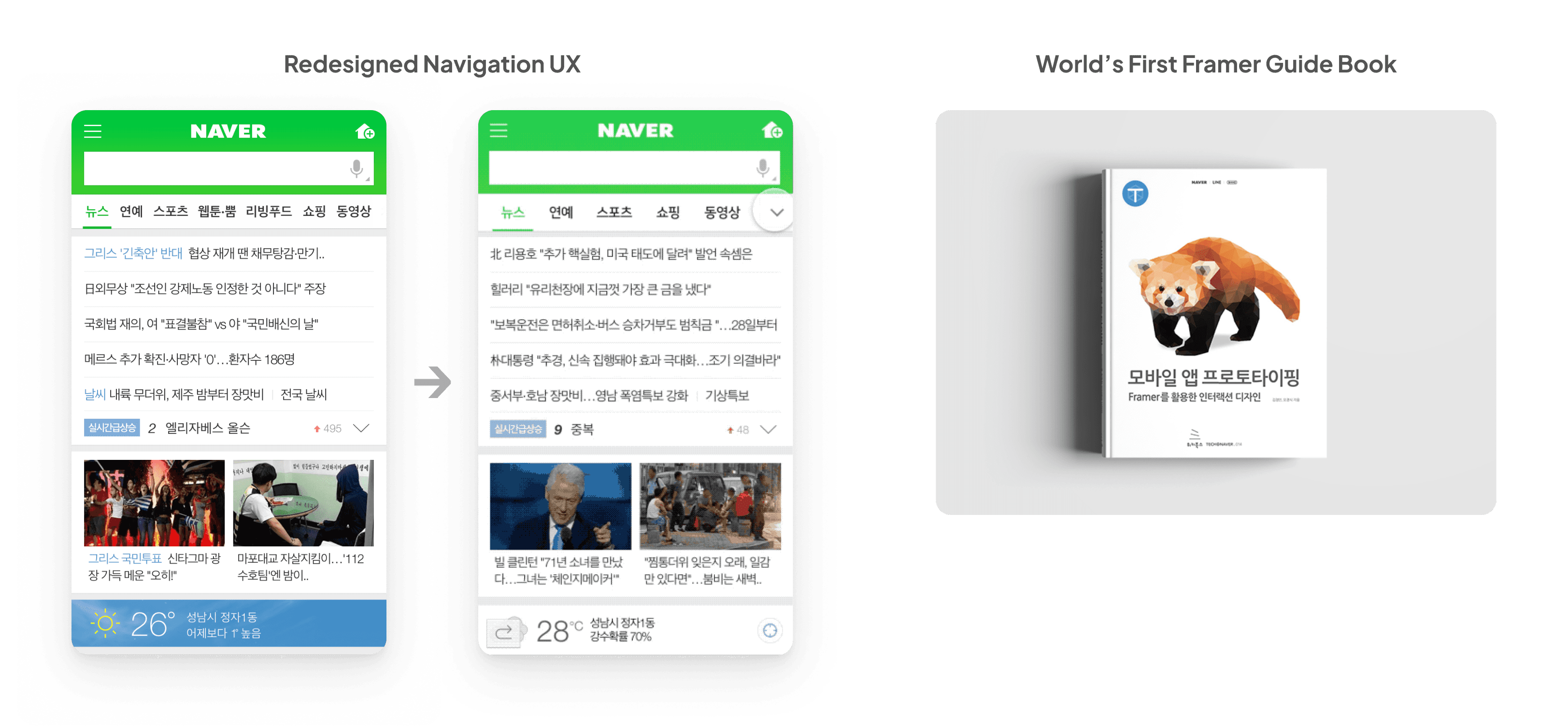
and published the world’s first Framer guidebook grounded in this project.
Design Concept: Expandable Menu Navigation
Design Concept: Expandable Menu Navigation
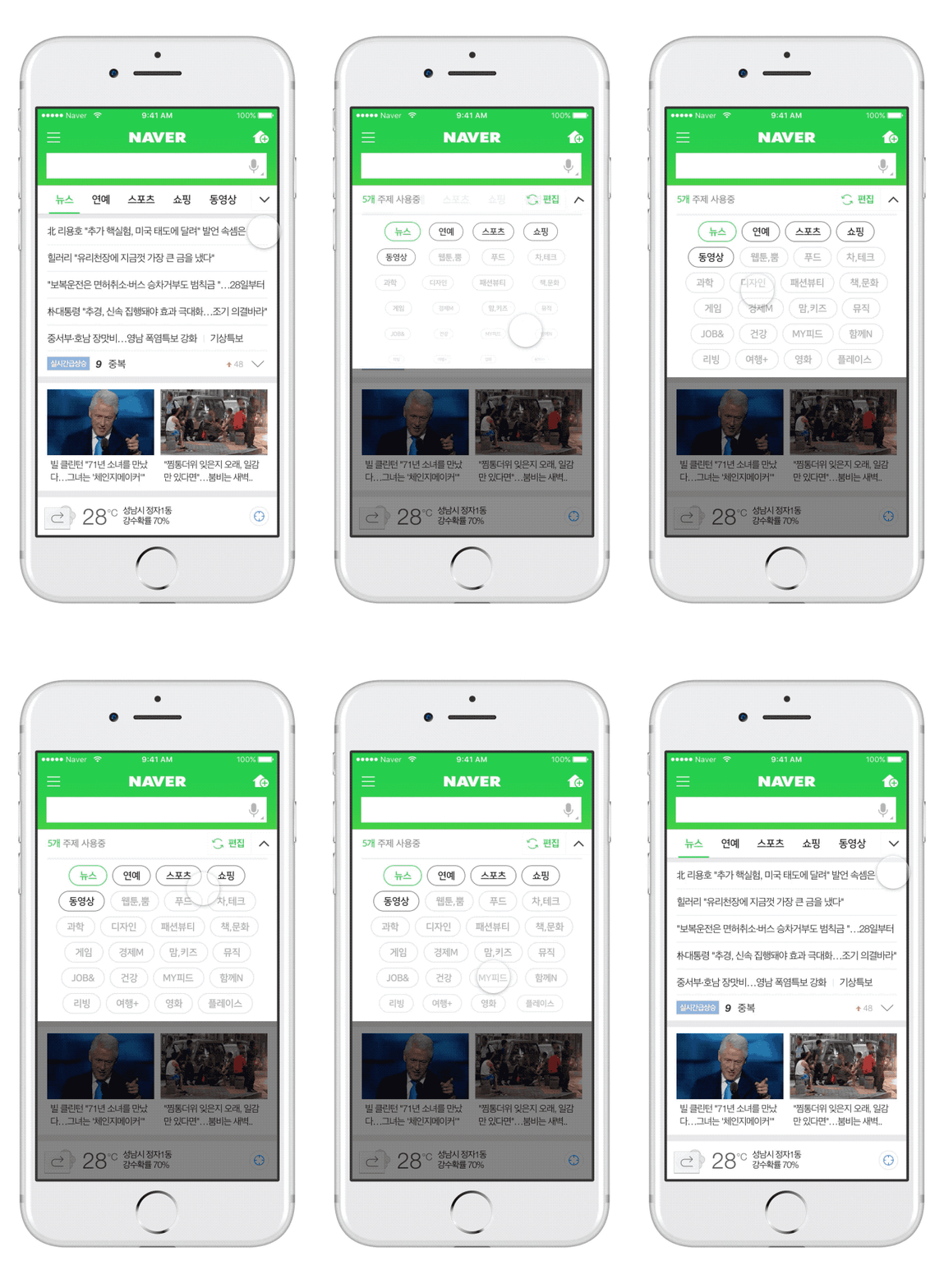
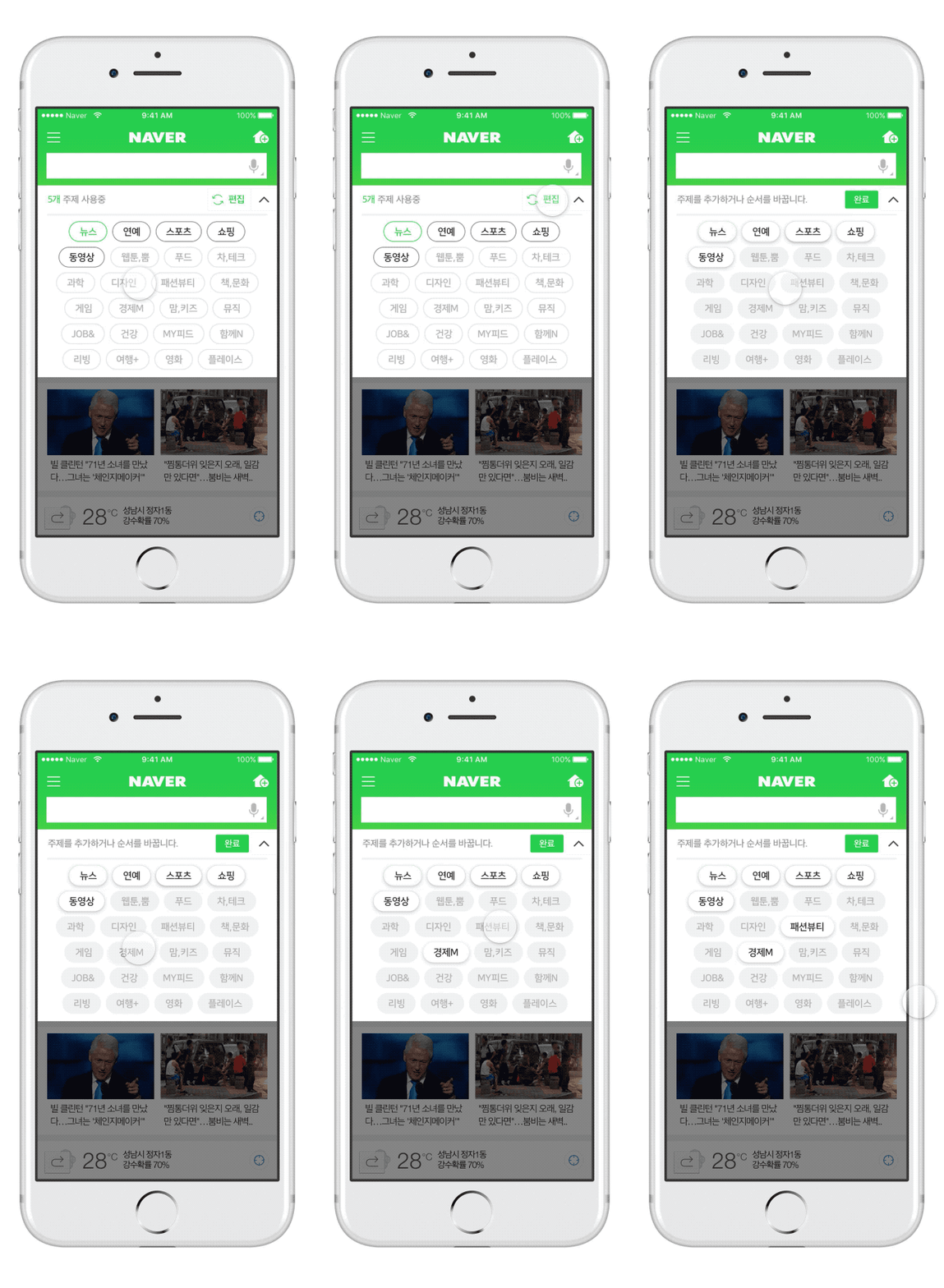
Expanding the navigation height on a home screen used by 30M+ users was not an option due to strict business and ad-inventory constraints. To overcome this, I explored an interaction model where users could expand the navigation on demand, enabling freer exploration without reducing content space. This approach also allowed users to discover unseen menus and edit their home more naturally.
Expanding the navigation height on a home screen used by 30M+ users was not an option due to strict business and ad-inventory constraints. To overcome this, I explored an interaction model where users could expand the navigation on demand, enabling freer exploration without reducing content space. This approach also allowed users to discover unseen menus and edit their home more naturally.
Explorations to Improve Discoverability
Explorations to Improve Discoverability
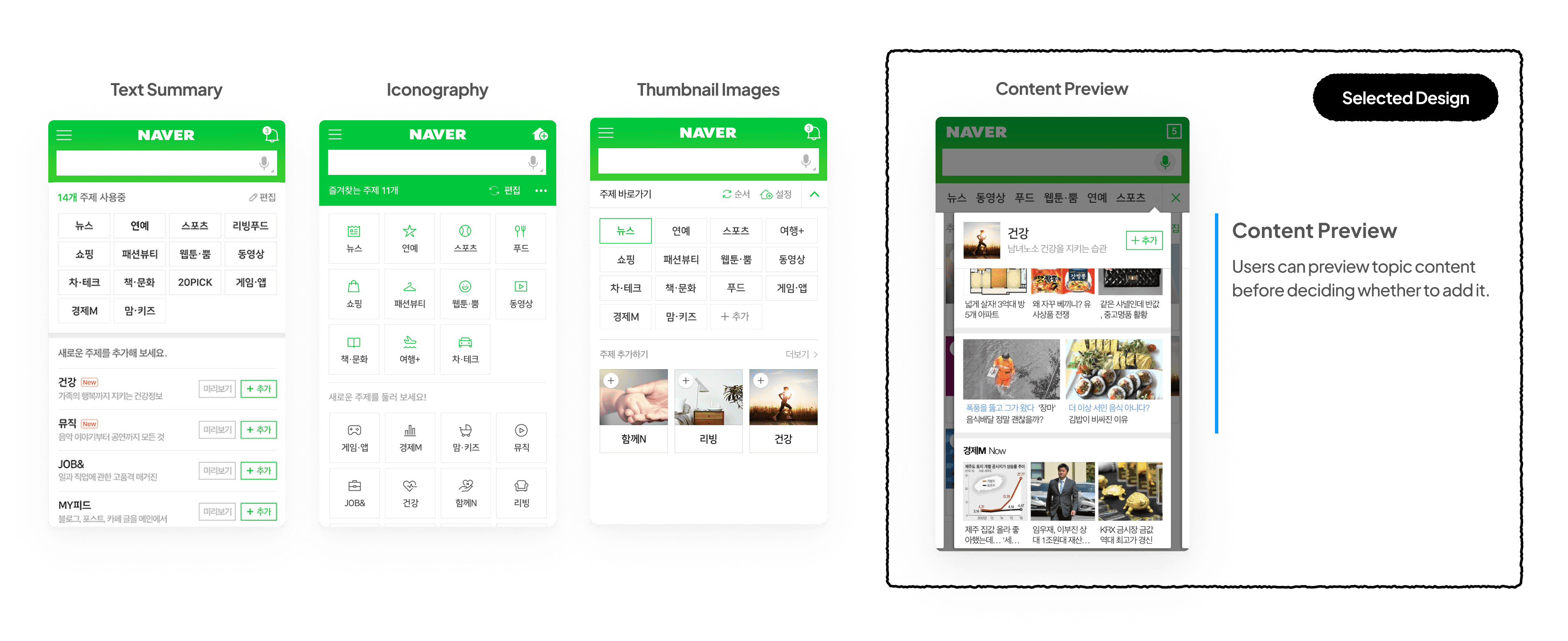
After defining the navigation model, I explored how to better surface topics users had not yet subscribed to.
I designed multiple concepts: summaries, icons, and image-based cues, to improve clarity and attract attention.
Through these iterations, I confirmed that prominent content previews were the most effective way to encourage discovery and set the final direction.
After defining the navigation model, I explored how to better surface topics users had not yet subscribed to.
I designed multiple concepts: summaries, icons, and image-based cues, to improve clarity and attract attention.
Through these iterations, I confirmed that prominent content previews were the most effective way to encourage discovery and set the final direction.
Final Design: New Navigation
Final Design: New Navigation
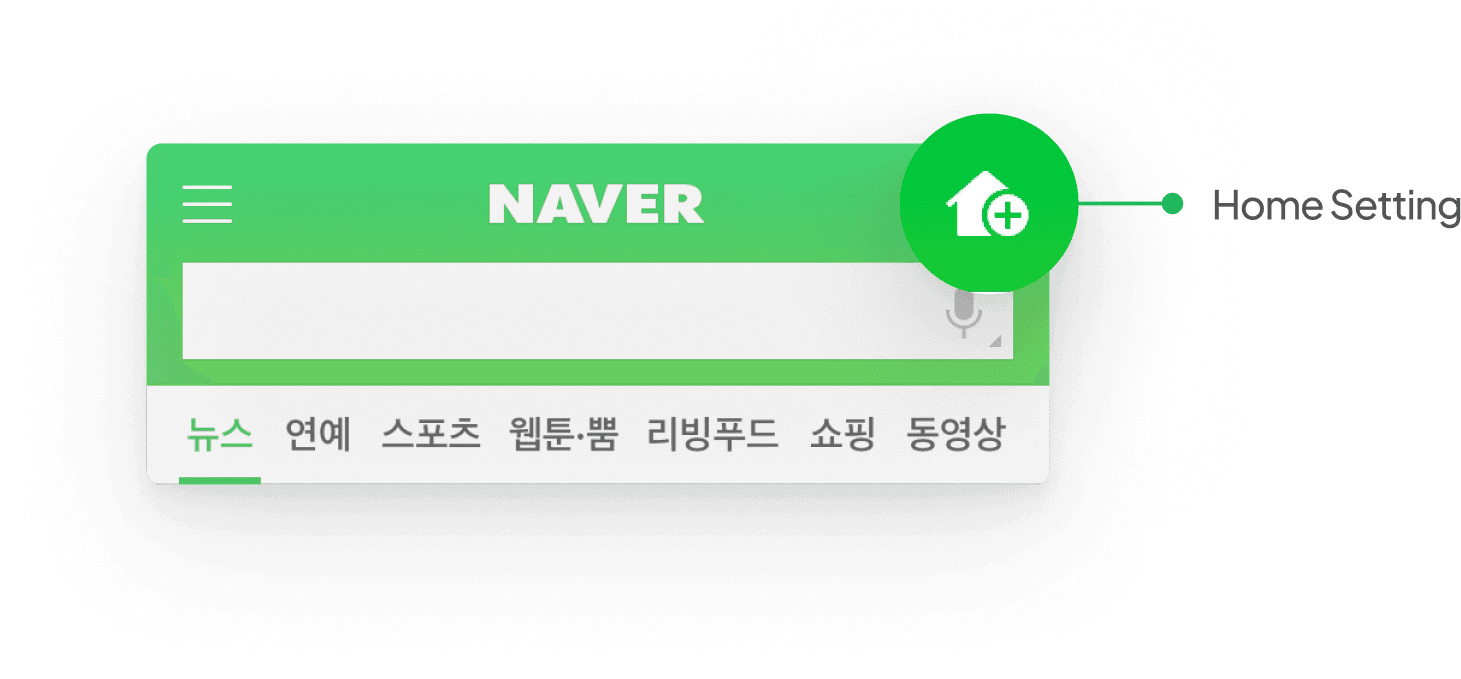
After validating the expandable navigation on Mobile Web, the final design was rolled out across both app and web.
The experience lets users explore all topics at once and quickly add or edit them with minimal steps.
After validating the expandable navigation on Mobile Web, the final design was rolled out across both app and web.
The experience lets users explore all topics at once and quickly add or edit them with minimal steps.

Final Design: Preview Experience
Final Design: Preview Experience
For topics users haven’t added yet,
the preview experience lets them browse the content first and add it instantly when they find something they like.
This UX also prevents the side effect of overcrowded navigation, keeping reach to each menu consistently high.
For topics users haven’t added yet,
the preview experience lets them browse the content first and add it instantly when they find something they like.
This UX also prevents the side effect of overcrowded navigation, keeping reach to each menu consistently high.

Exploratory Concept: App Navigation
Exploratory Concept: App Navigation
This alternative concept visually unified the search bar and navigation, and introduced a richer, app-specific interaction model.
Instead of a downward expansion, users could
“pull” the navigation to the right to reveal additional menus, and explore all categories through
a dedicated discovery overlay.
Although this design was not adopted due to a business decision to unify the app and web experience, it represents an exploration toward a more fluid and expressive navigation model.
This alternative concept visually unified the search bar and navigation, and introduced a richer, app-specific interaction model.
Instead of a downward expansion, users could
“pull” the navigation to the right to reveal additional menus, and explore all categories through
a dedicated discovery overlay.
Although this design was not adopted due to a business decision to unify the app and web experience, it represents an exploration toward a more fluid and expressive navigation model.
Early Design Explorations: Stays card
Early Design Explorations: Stays card
For users entering the Home Settings flow,
I designed an auto-recommendation experience that suggests topics based on gender and age characteristics.
This helps less active users personalize their content more easily,
and improves overall reach to topic feeds.
For users entering the Home Settings flow,
I designed an auto-recommendation experience that suggests topics based on gender and age characteristics.
This helps less active users personalize their content more easily,
and improves overall reach to topic feeds.

Results: Personalization Adoption from 14% → 60%
Results: Personalization Adoption from 14% → 60%
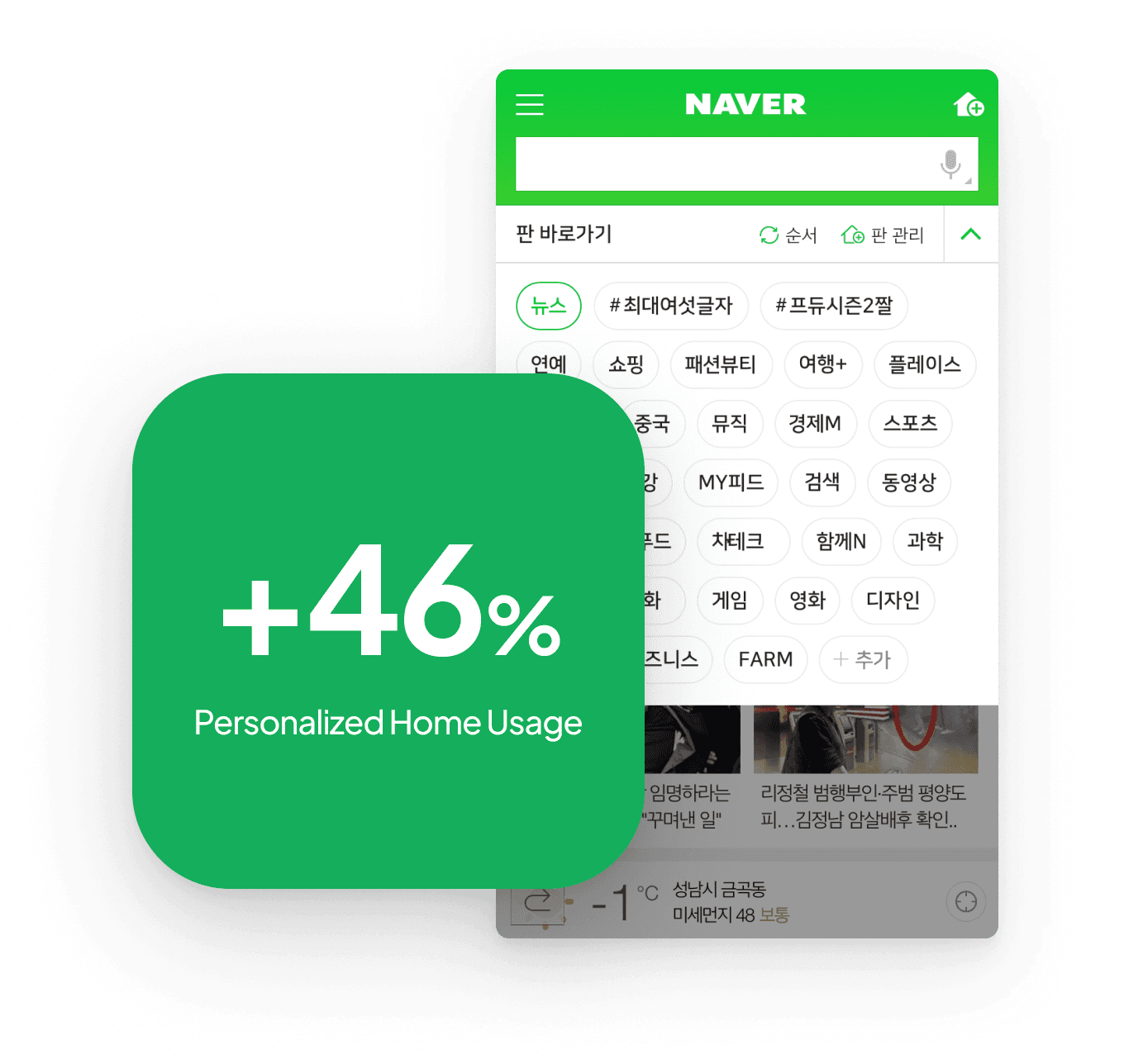
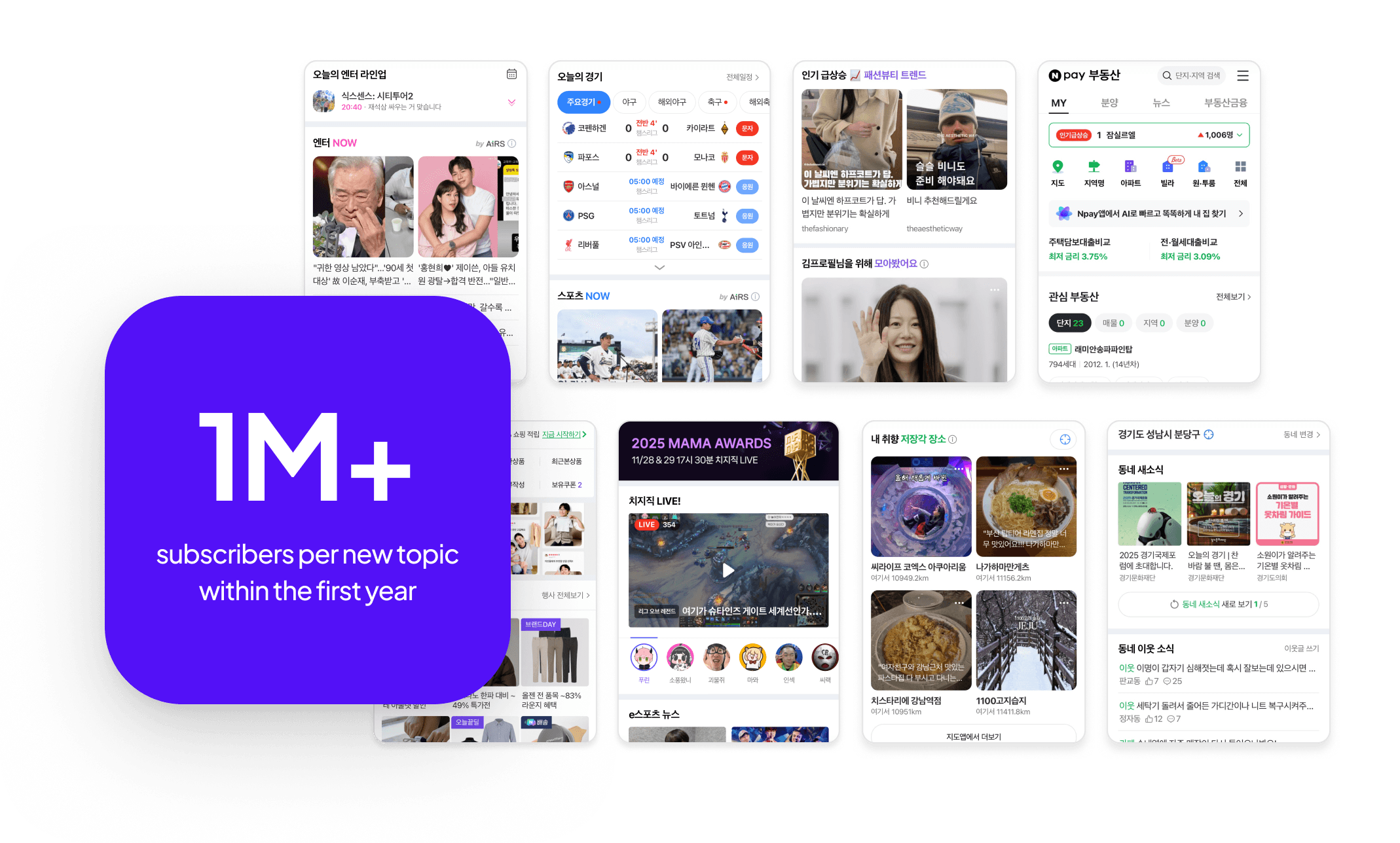
Over a year of iterative navigation and home-settings improvements, the share of users with a personalized Home grew from 14% to 60%. Topic reach also increased significantly, and more than half of all newly added topics surpassed 1M subscribers within the first year.
Over a year of iterative navigation and home-settings improvements, the share of users with a personalized Home grew from 14% to 60%. Topic reach also increased significantly, and more than half of all newly added topics surpassed 1M subscribers within the first year.
Further More: World’s First Framer Guide Book
Further More: World’s First Framer Guide Book
As interest in prototyping grew outside NAVER, I wanted to share these learnings more broadly.
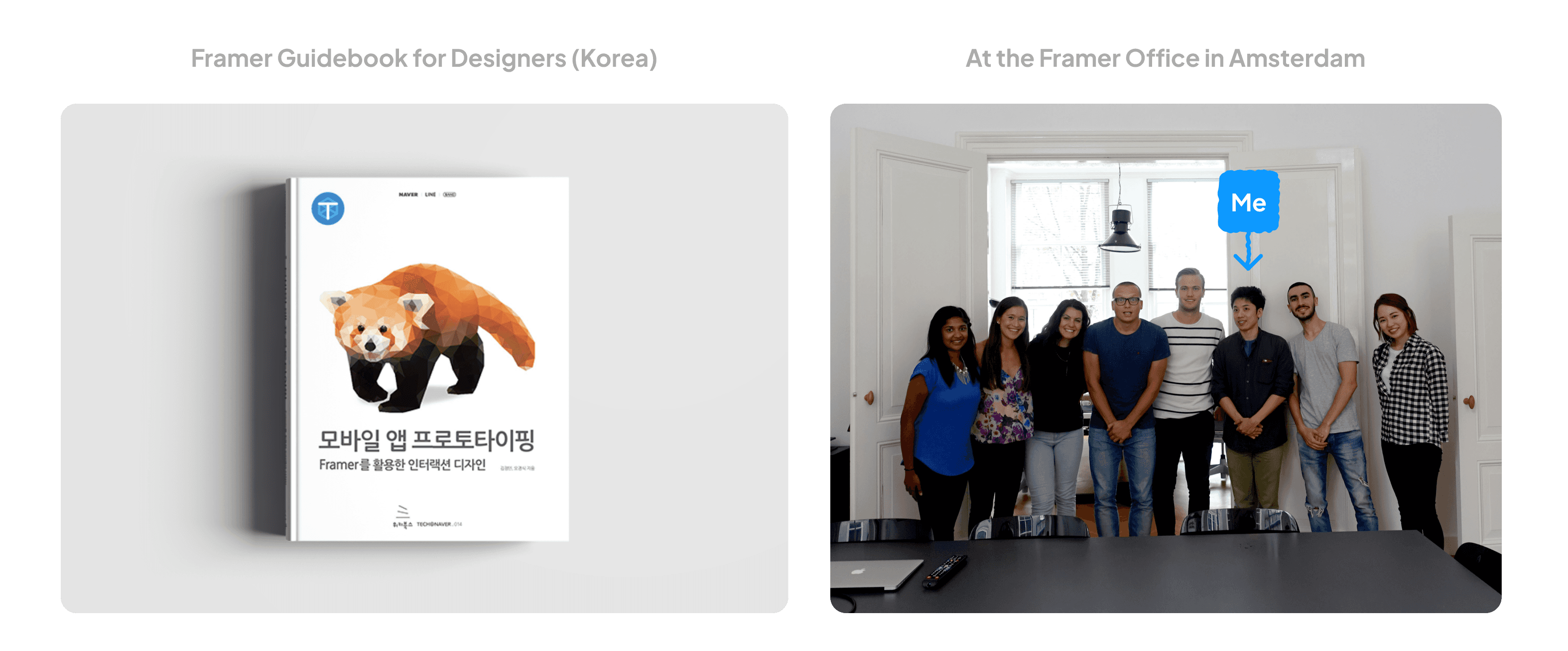
Based on my NAVER App case studies, I authored a Framer prototyping guidebook,
the first Framer guidebook ever published in print worldwide.
As interest in prototyping grew outside NAVER, I wanted to share these learnings more broadly.
Based on my NAVER App case studies, I authored a Framer prototyping guidebook,
the first Framer guidebook ever published in print worldwide.
Other Improvements: Across the NAVER App Ecosystem
Other Improvements: Across the NAVER App Ecosystem
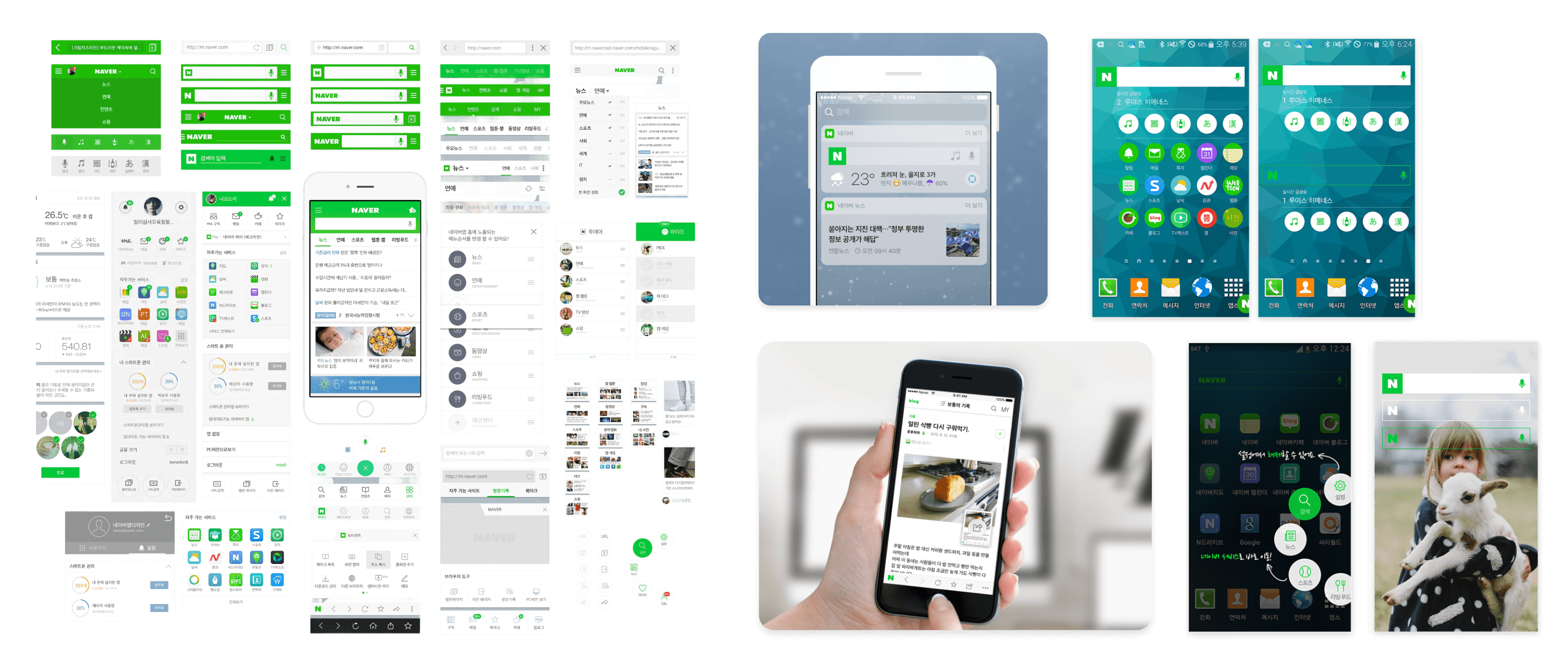
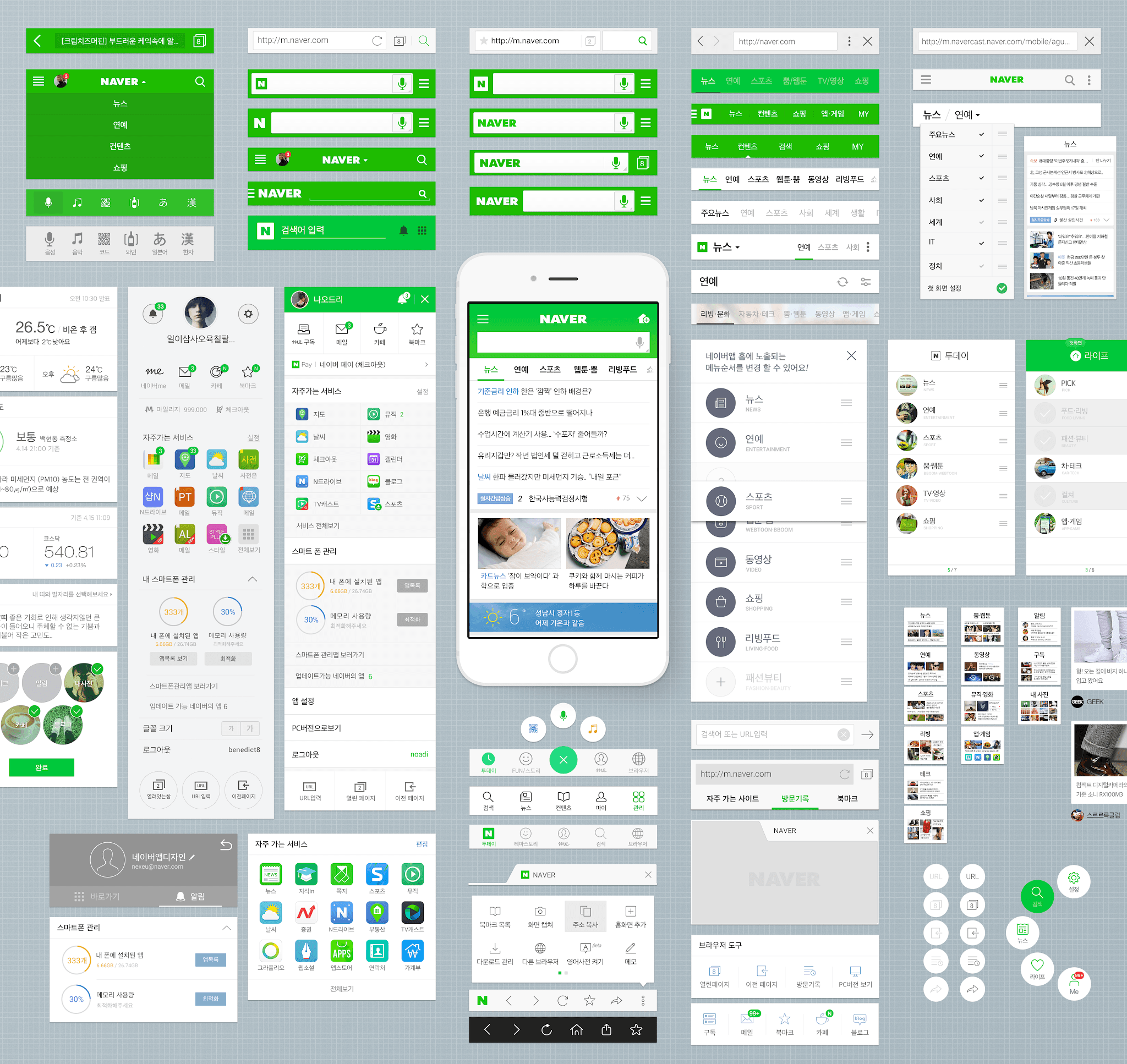
Beyond navigation, Naver App project extended into redesigning the broader NAVER App ecosystem across Home structure,
search-to-discovery flows, browser experience, and service-level navigation.
I also designed for multiple platforms such as Android/iOS widgets and other supporting environments.
Beyond navigation, Naver App project extended into redesigning the broader NAVER App ecosystem across Home structure,
search-to-discovery flows, browser experience, and service-level navigation.
I also designed for multiple platforms such as Android/iOS widgets and other supporting environments.